

Check out the Hardwood Floors magazine Resource Book with more than 3,400 listings of manufacturers, distributors, and other NWFA members.
View Digital Edition
Cork
Back to Species Gallery
Species - Domestic
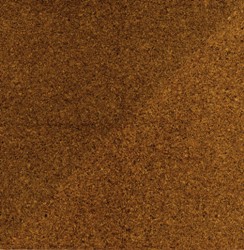
Top portion is finished with water-base finish; bottom with oil-based finish
Appearance
Color: Varies from light to dark; many colors available depending on manufacturer
Grain: Distinctive look unlike wood - cork is actually the bark of a type of oak.
Variations: Many patterns available depending on manufacturer.
Workability
Sawing/Machining: Cork may be cut with a utility knife
Sanding: Use the finest grit possible to flatten the floor. The following sequences are recommended for use only with a multi-disc sander or a hard plate on a buffer. If the edger is used, fine sandpaper (100/120/150) should be backed with a maroon pad.
Nailing: Cork is installed using adhesive
Finishing: All surface-type finishes are successfully used on cork (choose a finish that will bend as the cork compresses). Oil-and-wax also is used frequently.
Comments Pay particular attention to subfloor preparation, as cork is very sensitive to moisture, and also transfers any imperfections in the subfloor to the surface appearance. Origin: Spain and Portugal
Properties
Hardness/Janka: Varies
Dimensional Stability: Cork reacts quickly, sometimes within hours, to changes in moisture. (Typical dimensional stability measurements do not apply to cork's composite construction).
Durability: Availability
Readily available.