
Check out the Hardwood Floors magazine Resource Book with more than 3,400 listings of manufacturers, distributors, and other NWFA members.
View Digital Edition
Red Oak
Back to Species Gallery
Species - Domestic
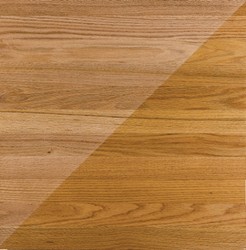
Top portion is finished with water-base finish; bottom with oil-based finish
Appearance
Color: Heartwood and sapwood are similar, with sapwood lighter in color; most pieces have a reddish tone. Slightly redder than white oak.
Grain: Open, slightly coarser (more porous) than white oak. Plainsawn boards have a plumed or flared grain appearance; riftsawn has a tighter grain pattern, low figuring; quartersawn has a flake pattern, sometimes called tiger rays or butterflies.
Variations Within Species And Grades: Over 200 subspecies in North America; great variation in color and grain, depending on the origin of the wood and differences in growing seasons. Northern, Southern and Appalachian red oak can all be divided into upland and lowland species.
Workability
Sawing/Machining: Above average in all machining operations.
Sanding: Sands satisfactorily if the correct sanding sequence is followed.
Nailing: No known problems.
Finishing: Stains well & demonstrates strong stain contrast. Red oak generally works better than white for bleached floors because it is more porous, and because tannins in white oak can discolor the floor.
Comments Origin: North America
Properties
Hardness/Janka: 1290 Northern (benchmark). Southern: 1060; 18% softer than Northern red oak.
Dimensional Stability: Northern: average (8.6). Southern: below average (11.3; 31% less stable than Northern red oak.
Durability: Availability
Easily available.